Weather & Track Conditions in Greyhound Racing: How Going Affects Results
Best Greyhound Betting Sites – Bet on Greyhounds in 2026
Loading...
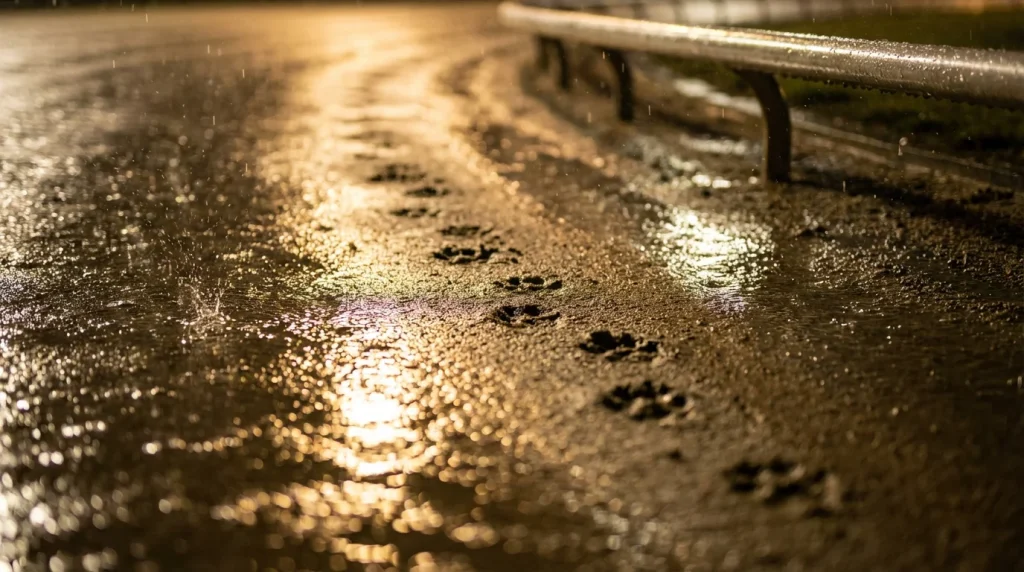
The Surface Under Their Feet Changes the Race
Greyhound racing happens on sand, and sand changes character with the weather. A track that runs fast and firm on a dry Tuesday evening will produce slower times on a rain-soaked Friday. The dogs are the same. The distances are the same. The surface isn’t, and that variable affects race outcomes in ways that most bettors underestimate.
Unlike horse racing, where going reports are central to form analysis and prominently displayed on every racecard, greyhound racing treats track conditions as a background factor. Official going reports exist but receive far less attention from bettors and media. This creates an analytical gap that can be exploited: when conditions shift significantly from a dog’s recent runs, the form figures become less reliable, and the dogs best suited to the current surface gain an edge that the market doesn’t always price in.
Understanding how weather affects greyhound tracks doesn’t require meteorological expertise. It requires awareness of the basic relationship between moisture, sand consistency, and race times, combined with a willingness to check conditions before accepting form at face value.
How Weather Affects Sand Tracks
The running surface at UK greyhound tracks is composed of sand, sometimes blended with other materials to improve drainage and consistency. The key physical property is moisture content. When the sand is dry, it’s firm and fast — dogs get good traction and produce quick times. When it’s wet, the surface becomes heavier, requiring more effort per stride, and times slow across the board.
Rain is the primary variable. Light rain before a meeting can actually improve the surface by binding the sand particles together and creating a faster track than bone-dry conditions, which can make the sand loose and shifty. Heavy or sustained rain saturates the sand, creating a heavy surface that saps energy and produces significantly slower times. The relationship isn’t linear: there’s a moisture sweet spot where conditions are optimally fast, with deterioration on either side.
Temperature also plays a role, particularly at the extremes. Cold winter meetings produce firmer sand because the moisture in the surface partially freezes, creating a hard base. Hot summer evenings can dry the surface excessively, especially at tracks that weren’t watered before racing. Wind affects the surface indirectly by drying it out, and it can also create headwinds on the back straight that slow dogs in specific parts of the race.
Track maintenance practices interact with weather to produce conditions that vary meeting by meeting. Most tracks are harrowed between races to redistribute the sand and maintain an even surface. Some tracks water the surface before racing if conditions are too dry. The quality and timing of this maintenance affects the going, and it can change during a meeting — the surface often becomes faster through the card as the sand is compacted by successive races.
One factor unique to greyhound racing is that the running rail concentrates traffic on a specific part of the track. The sand on the inside line, where the leading dogs run, gets more wear and compaction than the wider parts of the track. This means inside-running dogs may encounter slightly different going conditions than wide-running dogs, though the effect is marginal at most well-maintained venues.
Going Reports in Greyhounds
Going reports in greyhound racing are less formalised than in horse racing but they do exist. The GBGB requires tracks to monitor conditions, and some data services report the going alongside race results. The descriptors are broadly similar to horse racing — “fast,” “standard,” “slow,” and “heavy” are common terms — though the scale is less granular.
The most practical way to assess going for a greyhound meeting is to check the early race times. If the first two or three races of a card are producing times noticeably slower than the track’s average for those grades and distances, the surface is riding heavy. If the times are faster than normal, conditions are quick. This real-time approach is more reliable than pre-meeting going reports, which can’t account for how the track develops once racing begins.
Calculated times, provided by services like Timeform, adjust for going conditions by normalising each meeting’s times against the track average. These adjusted figures allow you to compare a dog’s performance across meetings with different conditions, stripping out the surface variable and isolating the dog’s true ability. If you’re serious about form analysis, using calculated times rather than raw times is essential precisely because of the track condition variable.
For bettors who focus on specific tracks, building a personal log of conditions and their effect on times is worthwhile. Record the weather, the apparent going, and the average time deviation from the track norm for each meeting you bet on. Over a season, you’ll develop a calibrated sense of how much a wet night slows the track at your regular venue — information that generic going reports can’t provide with the same specificity.
Adjusting Selections for Conditions
When conditions change, some dogs gain and others lose. The bettors who adjust their selections accordingly have an edge over those who treat every meeting’s form as directly comparable.
Dogs with a strong finishing kick tend to benefit from heavier conditions. A soft surface saps the energy of front-runners who use their speed to lead from the traps, causing them to tire earlier than usual. The closers, who conserve their effort through the early part of the race, often find themselves gaining ground in the final straight as the leaders fade. If you identify a meeting running on heavy ground, favour dogs with strong late sectionals over pure front-runners.
Conversely, fast conditions favour early-pace dogs because the firm surface allows them to maintain their top speed for longer. On a quick track, the front-runner that usually just holds on might win by two or three lengths instead of a neck, and the closer that usually catches them might run out of track. Fast ground stretches the advantage of speed, making the form of pace-setters more reliable.
Heavier dogs tend to struggle more on soft ground than lighter dogs, because the energy cost of carrying weight through a soft surface is proportionally higher. If the track is riding heavy after rain, the lighter runners in a field — the ones at the lower end of the weight range for their grade — may gain a small physical advantage. This effect is modest but real over staying distances, where the cumulative energy cost compounds over a longer trip.
Trap draw adjustments can also be condition-dependent. On a very heavy track, the inside rail area can become more churned up than the wider lanes, because that’s where the majority of traffic runs. If the inside line is noticeably heavy, the usual advantage of an inside draw might be reduced or even reversed, making wider-drawn dogs comparatively better positioned. This is track-specific and meeting-specific, so real-time observation matters more than generalised rules.
One actionable approach: when you see early races on a card producing significantly slower or faster times than expected, pause and reassess any bets you’ve placed on later races based on standard-condition form. The price you took at 10:00 AM was set assuming typical conditions. If the track is riding two lengths slow, the dog you backed as a front-runner might need reconsideration — or at least you should be aware that its chance has shifted from what the form suggested.
Racing in the Rain
Rain doesn’t stop greyhound racing. Meetings proceed in all but the most extreme conditions, and the dogs, bred for speed on open ground, generally handle wet weather without distress. What changes is the race dynamics, and for bettors, that’s where the opportunity sits.
A wet meeting is a meeting where the market’s assumptions are slightly wrong, because the prices were set based on form achieved in different conditions. That misalignment doesn’t guarantee profit, but it creates the kind of pricing imprecision that informed bettors can exploit. Watch the weather. Check the early times. Adjust your thinking. The surface is part of the race, and the bettors who respect that produce better results than those who pretend every evening runs the same.