
Greyhound Racecards Tonight: Where to Find Cards & How to Prepare
 Available in US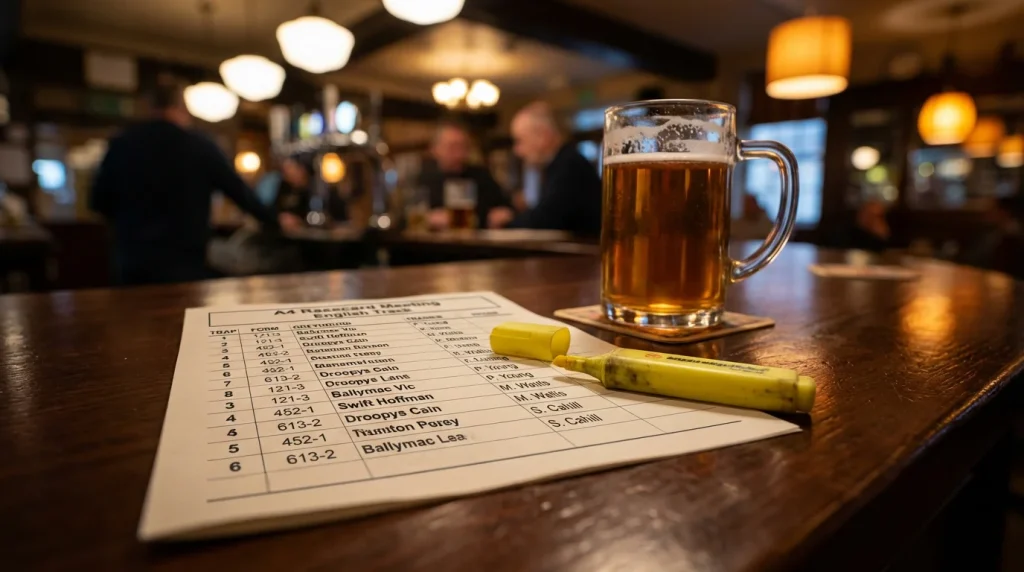
The Racecard Is Your Homework — Start Before the Meeting Does
Tonight’s greyhound racecards are published hours before the first race, and the bettors who use that lead time consistently outperform those who open the card five minutes before the off and pick on instinct. The racecard contains everything you need to make an informed selection: form figures, trap draw, race grade, weight, trainer, and recent times. It’s compressed information that rewards preparation and punishes haste. Get tonight’s results at dogracingfastresults.
Finding the cards, understanding what’s on them, and building a pre-race routine that extracts the maximum value from the data are practical skills that any greyhound bettor can develop. The tools are free. The data is public. The edge comes from the discipline to engage with it before the meeting starts rather than reactively as each race approaches.
Where to Find Tonight’s Cards
Greyhound racecards for tonight’s meetings are available from multiple sources, ranging from the official GBGB race programme through to bookmaker platforms and specialist form sites. The quality and depth of the information varies significantly between sources, and using the right one for your needs makes a practical difference to the quality of your analysis.
The GBGB’s own website provides the official race programme, including confirmed runners, trap draws, and basic form. This is the authoritative source for tonight’s declarations and is typically updated by late morning on the day of racing. It’s useful for confirming which meetings are running, which tracks are hosting, and the scheduled race times, though the form data is minimal compared to specialist providers.
Timeform’s greyhound section is the most analytically rich racecard source available in the UK. Timeform racecards include their proprietary ratings for each runner, sectional time data, race comments from recent runs, calculated times adjusted for conditions, and a form summary that goes beyond the standard finishing positions. For bettors who want the deepest data available on tonight’s runners, Timeform is the benchmark, though parts of the service require a subscription.
The Racing Post’s greyhound pages provide comprehensive racecards with form figures, recent times, weight data, and trainer records. The Racing Post’s presentation is clean and suitable for systematic analysis, and its archive allows you to look up previous form in detail. Like Timeform, some features are behind a paywall, but the free racecard pages cover the essentials.
Sporting Life, At The Races, and Oddschecker all provide free greyhound racecards with varying levels of form detail. Sporting Life’s cards are particularly well-designed for quick pre-race review, while Oddschecker’s value lies in its odds comparison function, which shows prices from multiple bookmakers alongside the racecard data.
Bookmaker platforms — Bet365, William Hill, Paddy Power, and others — publish their own racecards, typically integrated with the betting interface so you can assess form and place bets from the same screen. The quality of bookmaker racecards varies: some provide useful form snippets and trap statistics, while others offer only the bare minimum of runner information. For serious analysis, supplement any bookmaker racecard with data from Timeform or the Racing Post.
Best Free Racecard Sources
If you’re looking for tonight’s cards without paying for a subscription, several free sources provide enough data for effective pre-race analysis.
Sporting Life’s greyhound section offers free racecards for every UK meeting, including form figures, recent times, weight, and trainer. The interface is mobile-friendly, which matters because many bettors review cards on their phones during the commute home before an evening meeting. The site also provides fast results updates as the meeting progresses.
At The Races provides free racecards with a focus on the broadcast meetings available through its TV service and online streaming. The form data is adequate for standard analysis, and the site includes race previews for selected meetings that can supplement your own assessment.
The GBGB website and individual track websites publish tonight’s cards and are useful for confirming declarations, checking for non-runners, and accessing track-specific information like race distances and standard times. Some track websites also publish going reports and weather updates that aren’t always available on aggregator sites.
For odds comparison, Oddschecker remains the most comprehensive free tool. It displays prices from all major UK bookmakers on a single page, making it straightforward to identify the best available price on each runner. Used alongside a form-focused racecard from Sporting Life or the Racing Post, it creates a complete picture: form data from one source, pricing data from another.
A practical tip: bookmark your preferred racecard source and check it at a consistent time each day — late morning or early afternoon works well for evening meetings. This builds a routine where you’re reviewing the evening’s cards with a clear head and enough time to form opinions before the markets mature. Reviewing cards five minutes before the first race doesn’t give you enough time to spot the patterns and angles that produce value.
Pre-Race Preparation Checklist
A structured approach to tonight’s racecards produces better results than ad hoc scrolling through form. The following preparation sequence, completed before the first race of the evening, takes thirty to forty-five minutes for a typical card and dramatically improves the quality of your betting decisions.
Start with the full card overview. Scan every race on tonight’s programme, noting the grades, distances, and any feature events. Identify the races that fall within your area of knowledge — perhaps specific grades, specific distances, or races at a track you follow closely. These are your target races for the evening. You don’t need to bet on every race; selectivity is a strength, not a limitation.
For each target race, review the form of all six runners. Check the last three to five runs for each dog, noting finishing positions, times, race comments, grade level, and trap draws. Look for the indicators that experience has taught you to value: improving dogs, dropping grades, pace conflicts, draw advantages, trainer form. Form a preliminary opinion about which dogs you rate as contenders and which you’re prepared to dismiss.
Check the trap draw against your knowledge of the track’s bias. If tonight’s meeting is at a venue where inside traps carry a significant advantage, factor that into your assessment. A dog you rate on form that also has the draw in its favour is a stronger selection than one where the form and draw are working in opposite directions.
Compare your form assessment to the available odds. If the bookmakers’ prices broadly align with your analysis, there may be no value. If you’ve identified a dog that you rate as a 3/1 chance but the market is offering 6/1, investigate why — you might be seeing value the market has missed, or you might be missing something the market knows. This comparison is where preparation translates into betting action or disciplined abstention.
Finally, set your staking for the evening before the first race. Decide your unit stake, your maximum exposure for the meeting, and any specific staking adjustments for particularly strong or marginal selections. Having these parameters fixed in advance prevents the emotional staking adjustments that tend to occur mid-meeting when results are going against you. Also check our live greyhound results.
Ready Before the Off
The bettors who prepare tonight’s cards methodically have already made their most important decisions before the first trap opens. They know which races interest them. They know which dogs they rate. They know the price at which each selection becomes a bet and the price at which it doesn’t. Everything that happens after the off is execution of a plan, not reaction to circumstances. That distinction — between planned betting and reactive betting — is the practical difference between treating greyhound racing as a serious analytical exercise and treating it as a flutter. Both are legitimate. Only one tends to produce results.
