Greyhound Racing History UK: From Belle Vue to Modern Tracks
 Available in US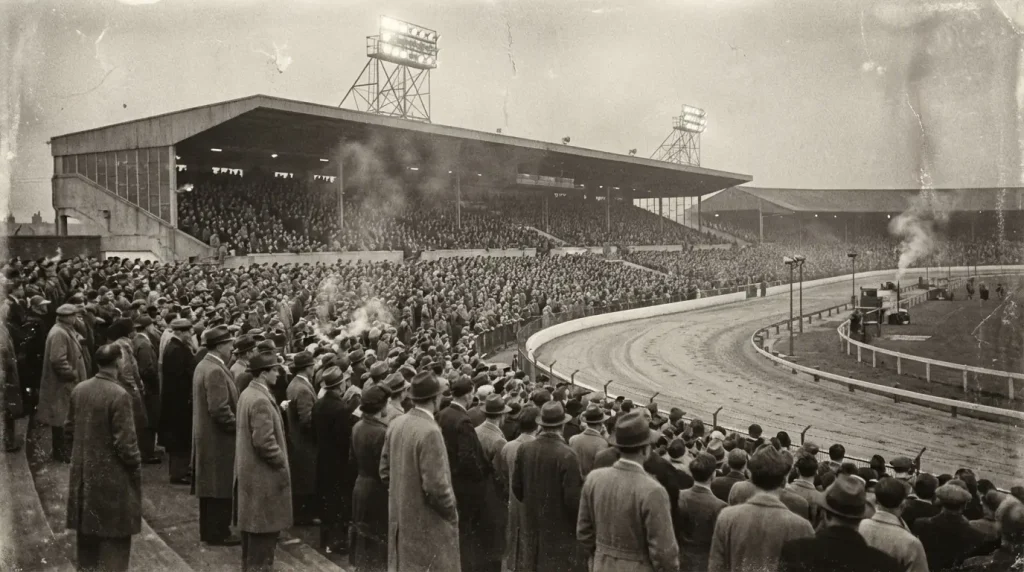
A Sport That Shaped Saturday Nights for Sixty Million People
Before football was broadcast, before betting shops existed, and before anyone had heard of the internet, greyhound racing was the most attended spectator sport in Britain. At its peak in 1946, the sport drew an estimated 70 million spectators annually across dozens of stadiums. Working-class communities in every major city had a local dog track, and Saturday night at the greyhounds was a social ritual as ingrained as the pub. The story of UK greyhound racing is a story of explosive growth, cultural dominance, long decline, and a smaller but persistent present. Learn more about the sport at dogracingfastresults.
Understanding that history gives context to the sport as it exists in 2026 — the tracks that remain, the traditions that survive, and the betting product that still generates substantial turnover despite operating in the shadow of its former self.
Belle Vue 1926: Where It Began
Commercial greyhound racing in Britain started at Belle Vue Stadium in Manchester on 24 July 1926. The concept was imported from the United States, where oval-track racing behind a mechanical hare had been developed in the early 1920s. An American promoter, Charles Munn, partnered with a British businessman, Major Lyne-Dixon, to bring the format to the UK, and Belle Vue was the venue that proved the concept could work.
The first meeting was a sensation. Thousands attended, far exceeding expectations, and the crowd’s enthusiasm demonstrated an immediate appetite for a new form of entertainment that combined spectacle, social gathering, and gambling in a single evening. Within months of Belle Vue’s success, promoters across the country were scrambling to open tracks. By the end of 1927, more than forty greyhound stadiums were operating in Britain.
The speed of expansion reflected a gap in the entertainment market. Horse racing was available but concentrated at racecourses outside city centres, requiring travel and typically attracting a more affluent crowd. Greyhound racing could be staged in urban stadiums, within walking distance of working-class neighbourhoods, on weekday evenings when people had leisure time. The format — short races, frequent events, accessible betting — was perfectly calibrated for its audience.
The National Greyhound Racing Club was established in 1928 to regulate the sport, setting rules for racing, licensing tracks, and attempting to control the rapid, occasionally chaotic expansion. This regulatory framework evolved over the decades and eventually became the GBGB, which governs the sport today.
The Golden Age: 1930s to 1960s
The interwar period and the two decades following World War II were greyhound racing’s golden era. By the late 1940s, Britain had over seventy licensed tracks and dozens more operating independently. Attendance peaked in 1946 at an estimated 70 million visits — a figure that put greyhound racing ahead of football as the country’s most attended spectator sport in that year.
The tracks weren’t just sporting venues; they were social hubs. Stadiums like White City in London, Perry Barr in Birmingham, and Powderhall in Edinburgh offered restaurants, bars, tote betting facilities, and a night out that combined entertainment with the thrill of a wager. Dog racing attracted everyone from factory workers to celebrities, and the biggest events — the English Greyhound Derby, the Laurels, the Scurry Gold Cup — drew national media attention.
The tote system, introduced at greyhound tracks before it reached horse racing, formalised on-track betting and generated revenue that funded prize money, stadium maintenance, and the regulatory infrastructure. On-course bookmakers operated alongside the tote, giving punters a choice of betting methods that persists to this day at the tracks that still race.
Greyhound breeding became a serious enterprise during this period. Irish breeders in particular developed bloodlines that produced faster, more consistent racers, and the pipeline of quality dogs from Ireland to British tracks established a cross-border relationship that continues in modern racing. The sport’s stars — individual greyhounds like Mick the Miller in the 1930s and Ballyregan Bob in the 1980s — became household names, achieving a level of public recognition that no racing greyhound has matched since.
The golden age was also the period when the sport’s relationship with gambling became its defining characteristic. While attendance was driven partly by entertainment and social factors, the ability to bet — quickly, repeatedly, in a social setting — was the primary draw for the majority of visitors. This dependence on gambling revenue would shape everything that followed, including the sport’s vulnerability to changes in how people bet.
Decline & Stadium Closures
The decline began in the 1960s and accelerated through every subsequent decade. The causes were multiple and compounding. Television kept people home. The Betting and Gaming Act 1960 legalised off-course betting shops, which meant punters could bet on greyhounds — and horses — without attending the track. The social habits that had made a Saturday night at the dogs routine began to shift as competing entertainment options multiplied.
Stadium closures became the visible marker of the sport’s contraction. The land occupied by greyhound tracks — large, flat, centrally located urban plots — became enormously valuable for property development as city populations grew and housing demand intensified. Track after track was sold to developers. White City, once the sport’s London flagship, closed in 1984 and the site was sold to the BBC for £30 million, becoming part of the BBC’s White City complex (now White City Place). Wimbledon, the last greyhound track in London, closed in March 2017 after decades of campaigning by both supporters and developers.
The closure list extends across every region. Hall Green in Birmingham. Catford in southeast London. Oxford. Reading. Bristol. Belle Vue itself, where it all started, ran its last race in 2020. Each closure removed not just a venue but a community gathering point and a piece of local sporting heritage.
By the early 2000s, the number of GBGB-licensed tracks had fallen from over seventy at the sport’s peak to around thirty. That number has continued to decline, with the current roster of active licensed tracks sitting significantly below even that figure. The tracks that remain tend to be those with modern facilities, strong bookmaker relationships through the BAGS programme, or ownership structures that aren’t under immediate development pressure.
The shift to online betting completed the decoupling of greyhound racing from its physical audience. Punters could watch races on screens and bet from their phones without ever visiting a stadium. While this sustained — and in some ways increased — the betting turnover on greyhound racing, it removed the gate revenue and on-course spending that had historically funded the tracks. The sport’s financial model became almost entirely dependent on bookmaker contributions through BAGS and media rights payments.
What Remains
The greyhound racing that exists in 2026 is a fraction of what the sport was at its height, but it’s not a relic. The remaining GBGB-licensed tracks run regular programmes, the BAGS schedule provides daily racing for the betting market, and the betting turnover on greyhound racing remains substantial — smaller than horse racing or football, but significant enough to sustain the sport commercially.
The major events persist. The English Greyhound Derby continues to attract the country’s best dogs and media coverage. Feature races at tracks like Nottingham and Kinsley draw competitive fields and engaged audiences. The sport retains a core community of owners, trainers, breeders, and dedicated punters who support it through attendance, betting, and advocacy. Also read our greyhound adoption and welfare.
What’s changed irreversibly is the sport’s place in British culture. Greyhound racing is no longer a mainstream entertainment — it’s a niche, sustained by its betting product and a loyal but smaller community. The stadiums that remain are functional rather than grand. The crowds are modest. But the racing itself, on the track, remains the same fast, competitive, data-rich sport it has always been. The history built the foundation. What happens next depends on whether the sport can find a sustainable model for a smaller future.
