
Sprint Races vs Stayers in Greyhound Racing: Distance Guide
 Available in US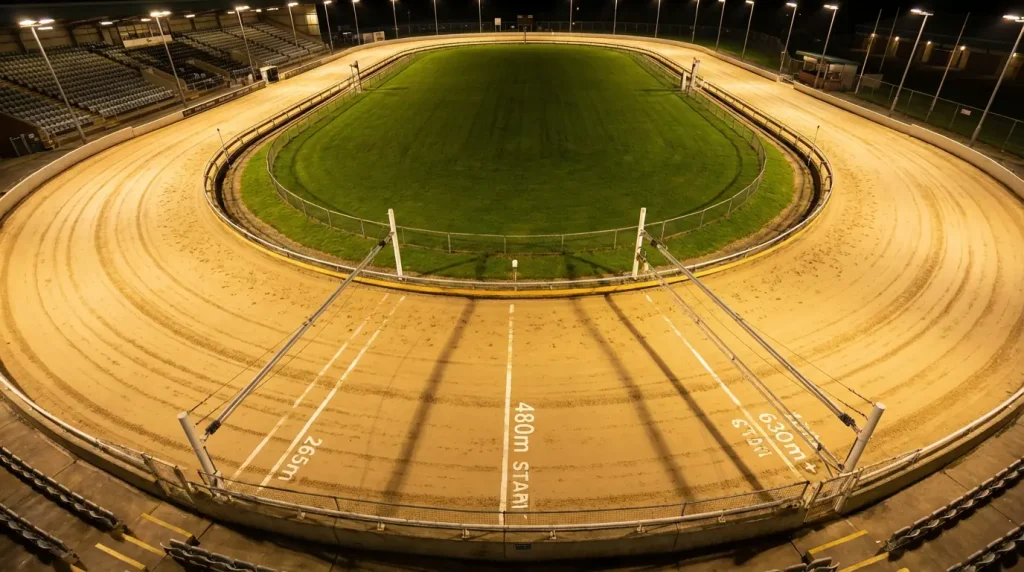
Distance Changes Everything in Greyhound Racing
A sprint and a stayer’s race are barely the same sport. The skills that win over 265 metres — explosive trap speed, instant acceleration, and the ability to hold a rail position through a single bend — are almost irrelevant over 630 metres, where sustained pace, stamina, and the intelligence to navigate six bends matter far more. Yet the same racecard format, the same six-trap setup, and the same betting markets cover both ends of the distance spectrum. Bettors who treat all greyhound races identically are ignoring the single most important variable after the dogs themselves. Find more race type guides at dogracingfastresults.
UK greyhound racing spans a distance range that’s broader than many casual followers realise. Sprint races start at 265 metres at some tracks. Standard distances sit between 400 and 480 metres, accounting for the majority of all UK races. Staying events stretch to 630 metres and beyond, with marathon distances exceeding 800 metres at venues that offer them. Each band produces different race dynamics, favours different physical profiles, and requires different analytical priorities from the bettor.
Sprint Distances: 265m–285m
Sprints are won and lost in the first two seconds. Over 265 or 285 metres, the race involves two bends and a finishing straight that arrives before most dogs have hit full stride. The entire event lasts around fifteen to seventeen seconds, which leaves essentially no time for tactical recovery. A dog that breaks slowly or gets baulked at the first bend has no race left to make up the lost ground.
The decisive factor in sprint racing is trap exit speed — the raw acceleration from standing start to top pace. Dogs bred and conditioned for sprints tend to be lighter than middle-distance types, with fast-twitch muscle fibres that produce explosive power at the expense of endurance. The best sprint greyhounds hit their peak velocity within a stride or two and can maintain it through two short bends.
Trap draw carries its heaviest weight in sprints. The first bend arrives so quickly after the start that the inside dog has an almost mechanical advantage — it’s already on the rail by the time the field reaches the turn. At sprint-specialist tracks, trap 1 win percentages can exceed 25%, far above the national average. If you’re betting on sprints, the draw should be your first analytical checkpoint, ahead of even the form figures.
Form analysis in sprints is narrower than for other distances. Recent trap times matter more than finishing sectionals, because there are no finishing sectionals to speak of — the race is over before stamina becomes relevant. The key data points are: how quickly the dog exits the trap, what position it holds at the first bend, and whether it has the pace to sustain that position through the second bend to the line. Everything else is secondary.
Standard Distances: 400m–480m
Middle distance is where most UK racing happens. The standard 480-metre race, or its variants at 400, 450, and 462 metres depending on the track, is the default trip at virtually every GBGB-licensed venue. This is the distance that grading systems are calibrated around, where the largest volume of form data exists, and where the betting markets are deepest and most efficient.
Over four bends and a finishing straight, middle-distance races test a broader range of attributes than sprints. Early pace still matters — the first-bend leader wins a majority of standard-distance races — but it’s no longer the only thing that matters. A dog with moderate early speed but strong bend-running and a finishing kick can win from second or third position in a way that’s almost impossible over sprint distances.
The balance between pace and stamina makes middle-distance racing the most analytically rich category for bettors. You need to assess trap exit speed, running style through the bends, response to pressure from other dogs, and the ability to sustain effort from the third bend to the finishing line. Sectional times become genuinely useful here because they reveal how a dog distributes its speed across the full race — information that’s largely irrelevant in a fifteen-second sprint.
Grade movements are most meaningful at standard distances because the grading system is primarily built around middle-distance performance. A dog stepping up from A5 to A3 over 480 metres faces a measurable increase in competition quality, reflected in faster times and higher-class rivals. The form data is deep enough to quantify these grade steps precisely, which makes standard-distance graded racing the most data-friendly category for systematic bettors.
Staying Races: 630m+
Stayers need pace and stamina — and the form tells you which they have. Staying races cover six bends, sometimes more, and demand that a greyhound sustains racing effort for forty seconds or longer. The physical demands are substantially different from sprint or middle-distance racing: stayers need the cardiovascular capacity to maintain speed deep into the race and the mental composure to handle the extended duration without losing focus.
The form signals that predict staying performance differ from those at shorter trips. Early pace is less decisive because there are more bends where positions can change. Sectional data becomes crucial — specifically, the comparison between a dog’s early and late sectionals over its recent runs. A dog that posts consistent splits throughout a middle-distance race is likely to handle the step up to staying trips. A dog that fades noticeably in the final straight at 480 metres will fade even harder over 630 metres.
Staying races attract smaller fields at many tracks, and the markets can be less competitive as a result. Some venues only programme staying races once or twice a week, which means the form data is sparser. Dogs running infrequently over staying distances build their form record slowly, and bettors need to be comfortable making assessments based on fewer data points than they’d have at standard distances.
The betting value in staying races often comes from dogs stepping up in distance for the first time. A middle-distance dog with strong finishing sectionals might be priced modestly because its form at 480 metres is unremarkable, but its stamina profile suggests it’ll improve over the longer trip. Spotting these distance-progression candidates before the market does is one of the more rewarding analytical exercises in greyhound betting.
Betting Adjustments by Distance
The market prices each distance differently, and understanding those pricing patterns helps you identify where value is most likely to appear.
Sprint markets tend to be heavily influenced by trap draw, which means the inside dogs are often shorter than their underlying ability warrants. If you can identify a wide-drawn sprinter with exceptional early pace — fast enough to overcome the draw disadvantage — the price will often be bigger than it should be because the market has overweighted the trap factor.
Standard-distance markets are the most efficient because they attract the most money and the most analytical attention. Finding value at 480 metres requires either very sharp form analysis or a focus on the less scrutinised meetings — BAGS racing, smaller tracks, early-week cards where the markets are thinner. The pricing at major evening meetings over standard distances is about as sharp as greyhound markets get.
Staying markets are where informational edges are most available. The smaller pools of money, the sparser form data, and the lower profile of staying races create a pricing environment where knowledge of individual dogs and their stamina profiles can produce genuine value. Specialist stayers are often well-known to regulars at a track but largely invisible to the wider betting market, which prices staying races based on general form rather than distance-specific data.
Across all distances, one principle holds: adjust your staking to the confidence level that the distance category allows. Sprint races are high-variance events where a single trap stumble can reverse the expected outcome. Staying races have their own variance from the extended trip and additional bends. Standard-distance racing offers the most data and the most predictable outcomes, which should be reflected in more confident staking when you’ve identified clear value. Also read our greyhound grading system.
The Distance Test
Distance is the question. The racecard is the answer. Every time you assess a greyhound race, the trip length should frame your entire analysis. What matters at 265 metres barely registers at 630 metres, and vice versa. The bettors who recognise that a greyhound’s value depends not just on its ability but on the race conditions it’s asked to perform in — distance chief among them — develop a more nuanced understanding of the sport than those who treat every race card the same way. Match the dog to the distance. Match your analysis to both.
