
Greyhound Early Speed Ratings: Why First-Bend Position Decides Races
 Available in US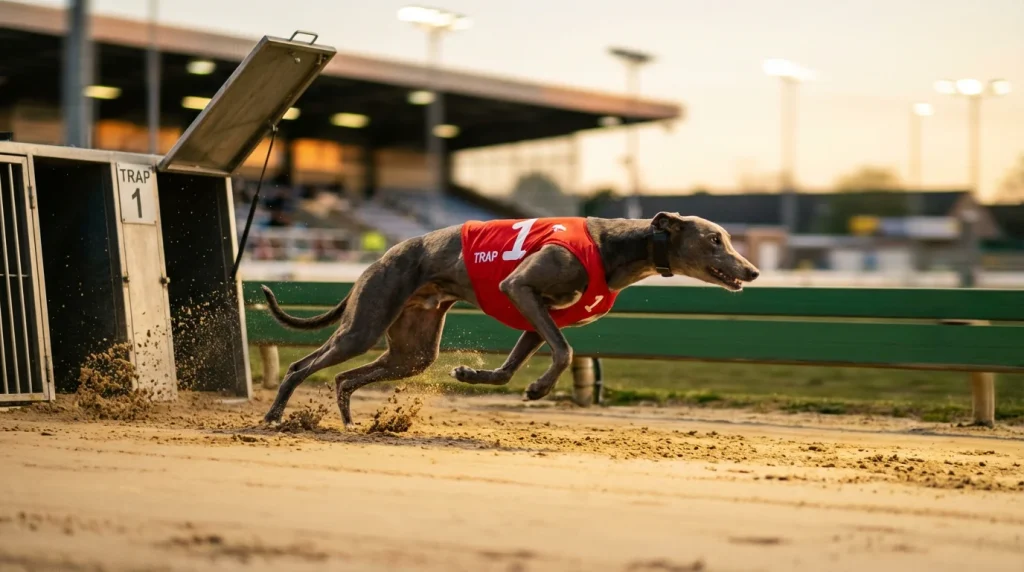
Early Speed Wins Greyhound Races — Most of the Time
The dog that leads at the first bend wins more often than not. That single statistic shapes the entire approach to greyhound race analysis, yet many bettors treat it as background noise rather than the dominant signal it is. Across UK tracks, the first-bend leader converts its position into a win somewhere between 55% and 65% of the time depending on the venue and distance. No other positional factor in greyhound racing comes close to that predictive power. Get more race analysis at dogracingfastresults.
The reason is mechanical. Greyhound tracks are oval, bends are tight, and races are short. Once a dog establishes the lead at the first turn and claims the rail, the rest of the field needs to either go around it — covering more ground — or wait for a gap on the inside that may never appear. In a race lasting thirty seconds, there’s limited time and limited opportunity to recover from a poor early position. The geometry of the track rewards the dog that gets there first.
This doesn’t make every front-runner a certainty. Some leaders tire, some get caught by closers with superior finishing speed, and some races produce early crowding that disrupts the expected pace. But the baseline statistical advantage of early speed is large enough that any serious greyhound bettor needs to account for it in every race they assess.
What Early Speed Means in Greyhound Racing
Early speed equals trap exit plus first-bend position. Those two components are distinct and both matter. A dog can be fast out of the traps but lose its advantage if it’s drawn wide and gets pushed off the rail at the bend. Conversely, a dog that’s moderate out of the boxes can still lead at the first bend if it’s drawn on the inside and the dogs beside it are slow to stride.
Trap exit speed is the pure acceleration from a standing start to full pace. Some greyhounds are natural breakers — they anticipate the hare, react quickly to the lids opening, and reach top speed within a stride or two. Others need a few metres to find their rhythm. This trait is partly innate temperament, partly training, and it tends to be consistent for any given dog. A greyhound that breaks slowly in three consecutive races is unlikely to suddenly become a speed machine in its fourth.
First-bend position is the outcome of trap exit speed combined with trap draw. A fast breaker from trap 1 has the shortest path to the rail and the highest probability of leading. A fast breaker from trap 6 faces a longer diagonal run to the rail and is more likely to be headed by an inside dog with comparable speed. This interaction between natural pace and starting position is why trap draw analysis and early speed assessment go hand in hand — you can’t evaluate one without the other.
The data for assessing early speed comes primarily from sectional times and race comments. The first sectional split — the time from trap opening to the first timing point — directly measures early pace. Race comments in the form guide, such as “led first bend” or “slow away,” describe the observed running position. Together, these two data sources build a reliable picture of each dog’s early-speed profile across its recent runs.
Identifying Early-Pace Dogs on the Racecard
Sectional splits and race comments tell the story. When you examine a racecard, the most reliable indicators of early speed are the first-bend sectional times from a dog’s recent runs. A dog that consistently posts fast opening splits — relative to the track’s average — is an early-pace runner regardless of whether it ultimately wins or not. The consistency matters more than any single fast time, because a one-off quick start might reflect a clean break from a favourable trap rather than genuine natural speed.
Look for patterns across three to five recent races. If a dog has led at the first bend in four of its last five runs, it has established early-speed credentials that are unlikely to change in the short term. If it’s led once and been mid-pack the other four times, that single lead was probably circumstantial — a wide-open inside trap, a scrappy field, or a night when the other dogs broke poorly.
Race comments provide qualitative context that sectional times alone can’t capture. A comment like “baulked first bend” tells you the dog had the pace to be prominent but was impeded — its early speed was there, the clear run wasn’t. A comment like “slowly away, never in contention” describes a dog that lacked early pace from the start, which is a different problem entirely. Learning to distinguish between dogs that are slow and dogs that were unlucky is one of the most valuable racecard-reading skills a greyhound bettor can develop.
Some form guides include a specific “early speed” or “pace” rating, distilled from sectional data into a single figure. Timeform’s greyhound service, for instance, provides ratings that incorporate early pace as a component. These summary ratings are convenient shortcuts, though they work best as a starting point rather than a final verdict. The raw data — the sectional splits, the race-by-race comments — always tells you more than any single number can.
One additional indicator worth monitoring is trap performance history. If a dog has run from multiple traps over its recent career, compare its early speed from each position. Some dogs show significantly better early pace from inside draws than from outside draws, which tells you their speed advantage is partly situational. Others are consistently fast regardless of trap, which marks them as genuine pace setters that can lead from anywhere.
Pace Conflicts: When Speed Dogs Collide
Two front runners from adjacent traps — that’s a pace conflict, and it’s one of the most tactically significant pre-race scenarios in greyhound betting. When two dogs with proven early speed are drawn side by side, the chances of both leading cleanly at the first bend drop sharply. One will likely impede the other, and sometimes both suffer as a third dog slips through on the rail while the speed dogs compete for position.
Identifying pace conflicts before the race is straightforward once you know each dog’s early-speed profile. Pull the first-bend sectionals for all six runners and note which dogs are the quickest away. If the two fastest breakers are in traps 2 and 3, or traps 5 and 6, there’s potential for crowding at the first bend. If they’re in traps 1 and 6 — opposite ends of the draw — the conflict is less likely because they’ll be running different lines into the bend.
The betting implications of a pace conflict depend on who benefits. The dog most likely to gain is a moderate-pace runner drawn on the inside of the warring speed dogs. While the two front runners are bumping and checking each other, the inside dog can maintain its line on the rail and potentially lead at the first bend despite not being the fastest breaker in the field. This scenario produces some of the best-value results in greyhound racing because the market often prices the two speed dogs as if they’ll both get their run, when the reality is that at least one — and sometimes both — will be compromised.
Pace conflicts also create opportunities for closers. If the two fastest dogs exhaust each other through the first two bends, a dog with a strong finishing kick that’s been sitting third or fourth might find itself within striking range in the final straight. The market tends to undervalue closers in races with obvious pace conflicts because punters focus on the likely leaders rather than the dogs positioned to pick up the pieces.
The most extreme pace conflicts occur in sprint races where the first bend arrives almost immediately and there’s no room for the speed dogs to sort themselves out. Over longer distances, even a contested first bend leaves enough race remaining for a fast dog to recover. But over 265 or 285 metres, a first-bend collision can end a dog’s chance entirely — the race is half over by the time the field straightens up.
Speed Without Stamina
Leading at the bend means nothing if you stop at the line. Early speed is the most powerful single predictor in greyhound racing, but it isn’t infallible, and the exceptions often produce the most interesting betting opportunities. Some dogs break brilliantly and hold the lead through two bends only to visibly tire in the final hundred metres, getting caught by a late-running rival in the shadow of the post. These are speed-without-stamina dogs, and the form usually identifies them clearly if you look for the pattern.
The tell is in the finishing sectionals. A dog that posts a fast first split but a declining second and third split is burning its reserves early. Over shorter distances, it might hold on. Over standard 480-metre trips, it’s vulnerable in the run-in. Over staying distances, it has almost no chance of lasting the trip. Also read our sectional times guide
For bettors, speed-without-stamina dogs present a dual opportunity. They’re often overbet because their early position looks impressive to anyone watching the race, and they frequently lead at stages where casual observers form their opinions. But their form figures tell a different story: consistent leads followed by fades, wins in sprints but defeats at standard distances, and improving sectionals in the early part of the race that mask declining ones at the finish. Recognising this profile lets you oppose these dogs at distances that expose their weakness, while potentially backing them at distances that suit their running style. Early speed is the strongest tool in the greyhound bettor’s kit. Knowing when it breaks is what separates smart analysis from simple front-runner worship.
